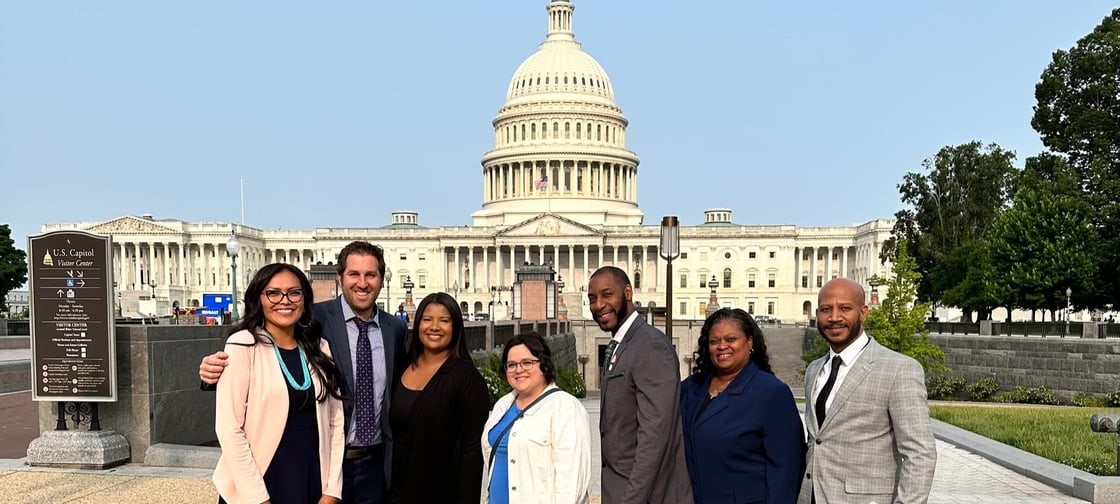
On September 15th, I attended an event hosted by the United Negro College Fund (UNCF), National Urban League, and the Education Post to showcase the release of their joint report, “Building Better Narratives in Black Education.” The event provided a forum within which African American leaders, including Dr. Michael Lomax, UNCF President and CEO, and Marc Morial, President and CEO of the National Urban League, could explore issues that serve as the motivation for the report itself: to “fundamentally chang[e] the narrative and face of education reform to meaningfully include Black voices, leaders and initiatives that truly have equity and Black student success at the core.”
Recognizing that historically education has been critically important to the African American community, and highlighting that the African American community has traditionally espoused and promoted equality of opportunity and access for students as vehicles to achieve social mobility and economic independence, the report offers four main approaches for building a better narrative in Black education:
Understanding what the community is saying
According to the report, though policy initiatives often focus on Black students’ educational attainment, the voices within their community often are not incorporated in a meaningful way. The report’s findings indicate that Black parents and caregivers are tired of the negative tone in education, and the language and key messages concerning educational improvement matter to them. Notwithstanding the challenges in education, it remains an important tool for success among African Americans.
Promoting and investing in high-quality reforms and initiatives
The report reveals that the African American community desires an equity-centered, quality education for African American students that will prepare them for college and promising careers. The report’s findings further indicate that the African American community is very knowledgeable and informed about key aspects in education policy including, but not limited to, high-quality schools.
Not only underscoring educational inequality, but truly celebrating success
The report notes that, while there are inequalities in education, successful approaches exist throughout the country that are striving toward academic success for all students. Notably, as examples of reform and innovation deserving of greater attention, the report showcases Achievement Prep, a network of two college preparatory charter schools in Washington, D.C. founded by Shantelle Wright, one of the co-panelists at the September 16th event. Achievement Prep serves a large majority of low-income, African American students. Also highlighted in the report is Urban Prep Academies, a network of all-male charter schools, serving mostly African American and economically disadvantaged students in Chicago, IL, and founded in 2002 by Tim King and other African American leaders.
Promoting the “urgency of now”
The report encourages swift action to change the narrative in Black education. Consistently hearing negative messages about their educational trajectory can have a detrimental influence on children’s self-efficacy and beliefs about education, the report notes. As parents and leaders can also become disillusioned and disengaged, the report contends the “stakes are too dire to delay making fundamental change for Black students.”
“Building Better Narratives in Black Education” concludes with a call to action buttressed by concrete recommendations, explaining that, “[c]ommunity-centered research entails not only capturing the perspective of members in a particular environment, but also acting on that information in a meaningful way.” Along those lines, the report offers these recommendations for the following stakeholders:
Grasstop and Congressional Leaders:
Endorse and support policy solutions that are sincerely aimed at high expectations, supports, opportunities and outcomes for Black children.
Ask the tough questions.
Challenge the misconception of apathy among Black parents.
Non-Profit Organizations and Education Reformers
Provide resources and tools to help communities advocate for Black students.
Partner with parents and other grassroots organizations to host informative sessions on education reform.
Conduct equity-centered research.
Funders
Be intentional about reaching out to diverse education reformers who have championed educational equity and community engagement.
Ensure that funded initiatives include parents’ voices in a significant way.
Parents
Parents are among the best advocates in education reform and, as a result, should use their voices to advocate for equitable policies and practices.
I was very much impressed by the sincere and substantive discussion of these issues, and the commitment the African American education leaders exhibited toward the enhancement of educational opportunities for African American students. “Building Better Narratives in Black Education” provides a wealth of analysis and recommendations for accomplishing this endeavor, and I was encouraged to see that the report highlighted a few charter schools as examples of vehicles for achieving meaningful progress.