Last week, the National Alliance and Thomas B. Fordham Institute rolled out a new report that analyzes pre-K offerings in public charter schools. What did they find? Charter schools in 36 jurisdictions are significantly restricted from offering pre-K programs – mainly because of policymaking and financial limitations, excluding them from the pool of pre-K providers.
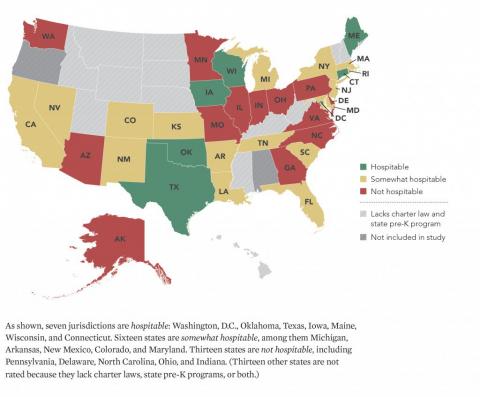
The report dove deep into each state’s political environment for starting pre-K programs and found astonishing results. In the map, you’ll see states that have hospitable, somewhat hospitable and not so hospital climates for charters to offer pre-K education. Also important to note, in states that do allow charter schools to offer pre-K, the schools still face several roadblocks, ranging from limited pre-K funding to restrictions on new providers. Charter schools are also often barred from automatically enrolling pre-K students into kindergarten programs without first administering a lottery for enrollment. Investing in early childhood development is important in shaping a child’s education and career ahead. Nina Rees, president and CEO of the National Alliance, explains three essential factors lawmakers need to keep in mind while formulating the next pre-K imitative in her latest U.S. News and World Report blog.